When parents hear the word histamine, they often think about allergies, hay fever or hives. But histamine also acts as a neurotransmitter in the brain and is involved in wakefulness and arousal.
This is why histamine can be worth considering when a child has changes in sleep, mood or behaviour, particularly when parents notice that symptoms seem to change depending on what the child has eaten.
Some children appear to tolerate histamine-containing foods without difficulty. Others may become more symptomatic when their overall histamine load becomes too high.
The important point is not to make children frightened of food or place them on unnecessarily restrictive diets. We are looking for patterns.
Health Snapshot
| What to Look For | Why It Matters |
|---|---|
| What you may notice | Difficulty settling, restless sleep, waking during the night, irritability, changes in mood, increased activity or difficulty winding down. |
| What may be contributing | Several higher-histamine foods eaten across the day may increase the child’s overall histamine load. |
| What to keep an eye on | Sleep, mood, behaviour and whether symptoms are more noticeable after higher-histamine days. |
| Where to start | Look at your child’s diet across several days and identify whether multiple higher-histamine foods are being eaten together. |
What Is Histamine?
Histamine is a naturally occurring chemical made by the body. It has several important roles, including immune responses, stomach acid production, blood vessel function and signalling within the nervous system.
Histamine is therefore not something we want to eliminate. The question is whether, for an individual child, the amount being produced and consumed is greater than their body can comfortably manage at that time.
What Do We Mean by the Histamine Bucket?
I often explain histamine to parents using the idea of a bucket.
Imagine your child has a bucket representing the amount of histamine their body can comfortably manage. One food adds a little. Another food adds some more. Then another.
Eventually the bucket can become too full and symptoms may become more noticeable.
This helps explain why parents sometimes say, ‘But they ate that food last week and they were fine.’ It may not be one individual food that matters. It may be the total histamine load across the day or several days.
Which Foods Can Be Higher in Histamine?
Foods commonly considered higher in histamine, or which may be relevant in a histamine-sensitive child, can include:
- tomatoes
- avocado
- banana
- oranges and mandarins
- spinach
- fermented foods
- aged cheeses
- processed or cured meats
- slow-cooked meats and broths
- some fish
- leftovers stored for longer periods
This does not mean these foods are unhealthy. Many are highly nutritious. The question is whether the combination and quantity are contributing to symptoms in a particular child.
What Can My Child Eat During a Low-Histamine Trial?
A low-histamine trial doesn’t mean there is nothing left to eat. The aim is to temporarily simplify the diet and choose fresher, lower-histamine foods while watching for changes in your child’s symptoms.
| Food Group | Lower-Histamine Ideas |
|---|---|
| Protein | Freshly cooked chicken, lamb, beef or turkey |
| Vegetables | Carrot, broccoli, cauliflower, zucchini, cucumber, sweet potato |
| Fruit | Apples, pears, blueberries, grapes, watermelon |
| Carbohydrates | Rice, oats, quinoa, potatoes |
| Fats | Olive oil, coconut oil |
| Snacks | Fresh fruit, rice cakes, vegetable sticks, simple homemade foods using tolerated ingredients |
Freshness matters. Cook meat fresh where possible rather than relying heavily on slow-cooked meats, broths or leftovers during the trial.
For a more comprehensive food guide, parents can use What the Bleep Can I Eat?
Why Can Leftovers and Slow-Cooked Foods Matter?
Histamine can increase in some foods as they are stored or processed. This means the same food may not always have exactly the same histamine content.
A family can be eating an extremely nutritious diet – bone broth, slow-cooked meat, avocado, spinach, tomatoes and fermented foods – yet inadvertently have many histamine-related foods appearing on the same day.
The goal is not to label those foods as bad. It is to recognise the overall pattern.
Could Histamine Affect a Child’s Sleep?
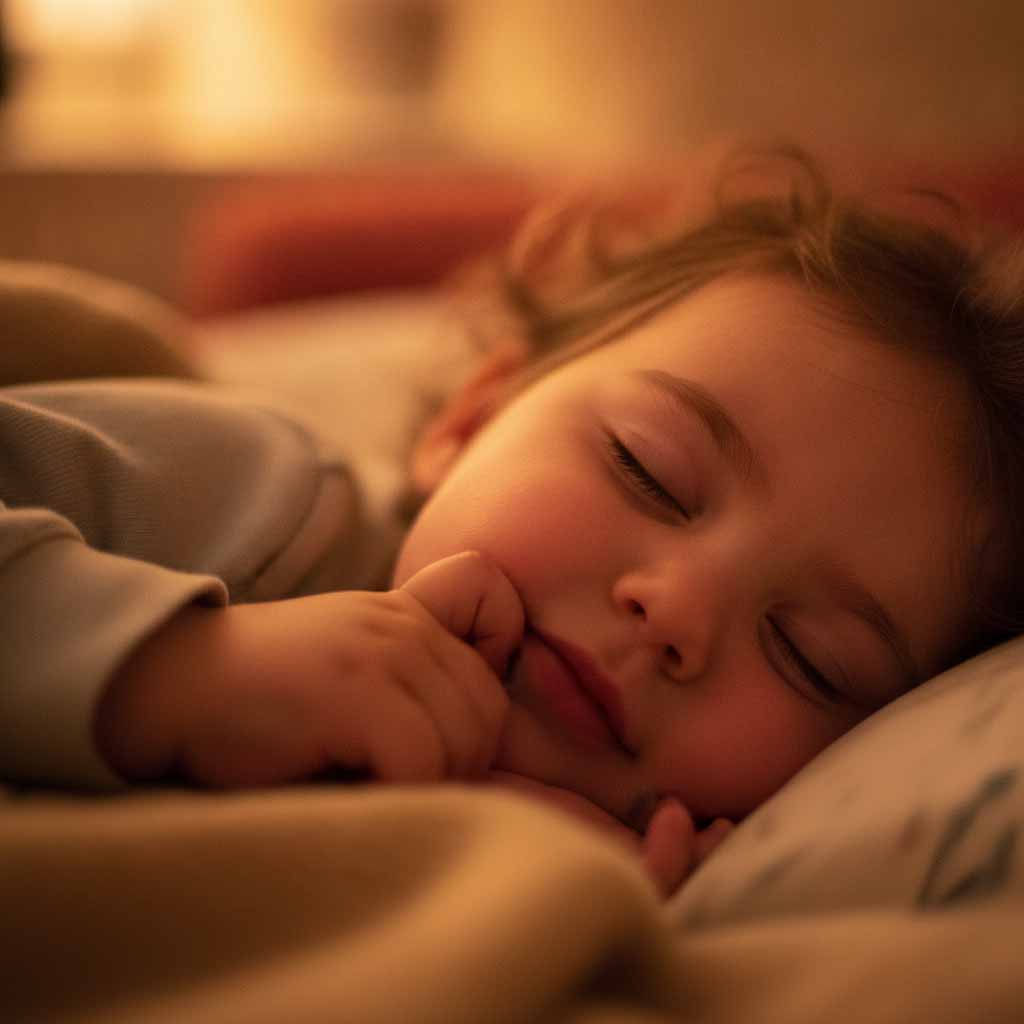
Histamine is involved in wakefulness and arousal in the brain. This makes sleep one of the symptoms we are interested in when assessing whether histamine may be relevant.
Parents may describe a child who struggles to settle, seems wired at bedtime, wakes frequently, sleeps restlessly, grinds their teeth, wakes very early or seems tired but unable to switch off.
There are many possible reasons for poor sleep in children. Histamine is one factor to consider when there is a repeatable pattern around higher-histamine food intake.
Could Histamine Affect Mood and Behaviour?
Because histamine acts as a neurotransmitter, it can be useful to look at food patterns when parents notice changes in arousal, mood or behaviour.
Some parents describe their child as more irritable, unsettled, unusually energetic, emotional, unable to wind down, more reactive or having difficulty concentrating.
These symptoms are not specific to histamine. The useful clue is whether there is a repeatable pattern between higher-histamine food intake and changes in the child’s symptoms.
What About Digestion?
The gut is relevant because histamine from food needs to be processed within the digestive system. We may therefore also note whether higher-histamine days coincide with digestive changes, but the main focus of this article is the child’s sleep, mood and behaviour. Our article on the gut–brain connection in children explains how closely these systems interact.
Do Children Need to Avoid Histamine Foods Forever?
No. The purpose of looking at histamine is not necessarily to put a child on a permanently restricted low-histamine diet.
For many families, a short trial can be more useful. We may reduce the main higher-histamine foods for around 7–10 days while parents track the symptoms they are concerned about.
Then we look at whether anything actually changed. If nothing changes, that is useful information too.
Why Is a Food and Symptom Diary So Helpful?
A food and symptom diary allows parents to put food intake and symptoms beside each other rather than relying on memory.
For example: tomato at lunch + banana snack + avocado at dinner, followed by a restless night + difficulty settling + irritability the following morning.
One day does not prove anything. But if a similar pattern appears repeatedly, it becomes much more useful.
What Do We Commonly See in Clinic?
In clinic, one of the most common histamine patterns we see is not a child eating one unusual food. It is a child eating several nutritious higher-histamine foods throughout the same day.
Breakfast might include banana. Lunch contains avocado and tomato. Dinner is a slow-cooked meal. There may be leftovers the following day and citrus fruit for a snack.
Individually, these foods may not appear to cause an obvious reaction. But when we look at the child’s total histamine load, the pattern can become clearer.
What Can Parents Do First?
Do not immediately remove dozens of foods. First, keep a food and symptom diary for several days and track sleep, mood, behaviour and any digestive changes.
Then look at the higher-histamine foods. Are several appearing on the same day?
If the pattern looks significant, a short 7–10 day reduction can help determine whether histamine is actually relevant to your child.
How The Children’s Naturopath Can Help
When histamine appears to be part of a child’s picture, we do not simply hand parents a long list of foods to remove.
We look at what the child is actually eating, how much histamine is appearing across the day, and whether there is a pattern with sleep, mood and behaviour.
The aim is to make the diet less complicated, not more complicated, while giving parents a practical way to see whether histamine is genuinely relevant to their child.
Frequently Asked Questions
Does my child need to avoid all histamine foods?
Usually that is not the starting point. Looking at the overall amount and the child’s individual pattern is often more useful than trying to remove everything.
Why can my child tolerate tomato one day but not another?
One possibility is that tomato was not the only histamine-related food eaten that day. The histamine bucket concept helps explain why the total load may matter more than one individual food.
Can histamine make my child hyperactive?
Histamine is involved in arousal and wakefulness, but hyperactivity has many possible influences. Look for a consistent pattern rather than assuming histamine is responsible.
How long should we try reducing histamine foods?
For the type of observational trial we use with families, around 7–10 days can often provide enough information to see whether the symptoms being tracked are changing.
Ready to Better Understand Your Child’s Health?
If you have noticed changes in your child’s sleep, mood or behaviour and wonder whether food may be part of the picture, looking at patterns can be a useful place to start.
The Children’s Naturopath supports children and families through consultations at our St Kilda clinic in Melbourne and by phone throughout Australia, New Zealand and internationally.