
When parents are asked whether their child is constipated, the answer is often: “No, they go every day.”
But how often a child goes to the toilet is only one part of the picture.
A child can open their bowels every day and still have stool sitting in the bowel if they are only passing a small amount at a time. This can happen when bowel movements are incomplete or when constipation has been present for some time.
That is why, when looking at constipation in children, it is useful to consider frequency, stool size and consistency, whether the child strains or withholds, and whether they appear to empty their bowel properly.
Health Snapshot
| What to Look For | Why It Matters |
|---|---|
| What you may notice | Hard stools, small bowel movements, very large stools, straining, withholding, tummy pain or skid marks in underwear. |
| What may be contributing | Low fibre or fluid intake, restricted eating, toilet avoidance, painful bowel movements, changes in routine or a history of constipation. |
| What to keep an eye on | Stool type and size, how easily it passes, whether your child appears to empty completely and any abdominal discomfort or withholding. |
| Where to start | Don’t look only at whether your child goes every day. Start looking at what the bowel movement itself is like. |
Can a Child Be Constipated Even If They Poo Every Day?
Yes. This is one of the most important things for parents to understand about childhood constipation.
A daily bowel movement doesn’t necessarily tell us that the bowel has emptied completely.
A child may pass a small amount each day while stool remains higher in the bowel. In other children, a very large bowel movement may suggest stool has been accumulating before it is finally passed.
This is why simply asking “Did they poo today?” doesn’t give us enough information.
We also want to know:
- What did it look like?
- How big was it?
- Was it hard or soft?
- Was it painful?
- Did the child strain?
- Were they withholding beforehand?
- Did they seem comfortable afterwards?
What Does Constipation Look Like in Children?
Constipation doesn’t look exactly the same in every child.
Parents may notice:
- hard, dry or pellet-like stools
- very large bowel movements
- painful bowel movements
- straining
- skipping days
- small amounts passed frequently
- avoiding the toilet
- hiding when they need to poo
- standing stiffly or crossing their legs
- abdominal pain or bloating
- reduced appetite
- skid marks or stool leakage in underwear
Some of these signs can be confusing.
For example, stool in a child’s underwear may look like diarrhoea or poor wiping when it can sometimes occur around retained stool.
What Does a Healthy Poo Look Like?
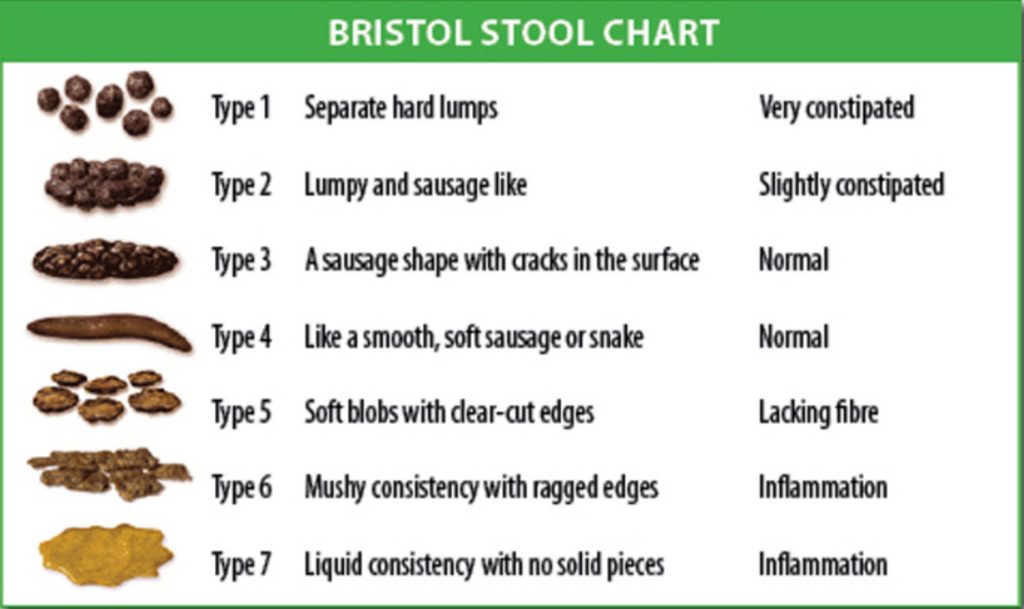
This is where the Bristol Stool Chart becomes useful. It was developed from the Bristol Stool Form Scale described by Lewis and Heaton in the Scandinavian Journal of Gastroenterology (1997).
The chart divides stools into seven types.
- Types 1 and 2 are generally associated with constipation.
- Types 3 and 4 are usually the easier, more comfortable stool types we are aiming for.
- Types 6 and 7 are loose or watery.
But don’t use the chart in isolation.
A Type 4 stool that is tiny and passed with difficulty tells us something different from a comfortable, substantial Type 4 bowel movement.
The chart helps parents describe what they are seeing, but size, frequency, comfort and ease of passing are also important. Our article on what a healthy poo looks like in children goes through this in more detail.
How Often Should a Child Poo?
There is normal variation between children, and bowel frequency also changes with age.
For most children, what matters is not achieving a particular number of bowel movements but establishing a comfortable, regular pattern without pain, withholding or hard stool.
A child who comfortably passes a soft stool every day is very different from a child who passes a few hard pellets every day.
This is why stool quality often tells us more than frequency alone.
Why Do Children Withhold Their Poo?
Withholding is extremely common in childhood constipation.
Sometimes it starts after one painful bowel movement. The child remembers that pooing hurt and begins trying to avoid doing it again. They may:
- cross their legs
- clench their bottom
- stand on their toes
- hide behind furniture
- become stiff
- refuse to sit on the toilet
- say they don’t need to go
The longer stool remains in the bowel, the more water can be absorbed from it, making the stool harder and potentially more uncomfortable to pass.
This can create a cycle: pain → withholding → harder stool → more pain → more withholding.
Breaking that cycle is often more important than simply telling a child to “try to go”.
Can Constipation Affect Appetite?
It can.
When the bowel is full of stool, some children feel bloated, uncomfortable or simply less hungry.
Parents sometimes describe a child who “hardly eats anything”. Then after a good bowel movement, their appetite suddenly improves.
This is why I always want to understand bowel function when assessing a child with poor appetite or fussy eating.
The digestive system doesn’t operate as a collection of separate parts. If a child is uncomfortable or backed up, it can influence how interested they are in eating.
Can Constipation Affect Mood and Behaviour?
Anyone who has been constipated knows it can make you uncomfortable and irritable.
For a young child who can’t clearly explain what they are feeling, that discomfort may show up as changes in behaviour:
- irritability
- restlessness
- emotional outbursts
- reduced appetite
- difficulty settling
- reluctance to sit still
- behaviour changes around toileting
This doesn’t mean constipation explains every behavioural difficulty.
But when a child’s mood or behaviour changes at the same time as their bowel pattern, the connection is worth noticing. We look at this in more detail in our article on whether constipation can affect a child’s behaviour and mood.
What About Fibre?
Fibre is important for healthy bowel function, but “give them more fibre” can be too simplistic.
We need to look at the child’s whole diet. Where is their fibre actually coming from?
- vegetables
- fruit
- legumes
- nuts and seeds
- whole grains where appropriate
A child who mainly eats highly refined carbohydrate foods may have a very different fibre intake from a child eating a broad variety of whole foods.
But fibre is only one part of the picture. Fluid intake, movement, toileting habits, stool withholding and the child’s existing level of constipation also matter.
Does Water Matter?
Adequate fluid is important for normal bowel function.
This is particularly worth looking at in children who are busy at school or childcare and simply forget to drink.
Rather than asking “Does my child drink water?” look at how much they actually drink over the course of the day.
Some children have a drink bottle with them all day but barely touch it.
Why Is Toilet Routine Important?
The bowel naturally becomes more active after eating.
Creating a relaxed opportunity to sit on the toilet after meals can therefore be helpful for some children.
The aim isn’t to pressure the child. It is to give the body a regular opportunity to respond to its natural signals.
For younger children, having their feet supported can also make the position more comfortable and stable.
What Do We Commonly See in Clinic?
In clinic, parents will often tell us that their child’s bowels are fine because they go every day.
But when we ask more questions, we may discover that the child passes only a small amount, the stool is hard, they strain, have very large bowel movements occasionally, regularly complain of tummy pain or have skid marks in their underwear.
That completely changes the picture.
We also commonly see constipation alongside fussy eating, poor appetite, abdominal bloating and changes in mood or behaviour.
This is why bowel movements are something we ask about even when constipation isn’t the reason the child has come to see us.
How Can Parents Get a Better Picture?
For a week or two, keep a simple record of:
- how often your child opens their bowels
- Bristol Stool Chart type
- approximate size
- whether they strain
- whether it hurts
- withholding behaviour
- tummy pain or bloating
- appetite
- any stool leakage or skid marks
You don’t need a complicated spreadsheet. A few notes each day can make patterns much easier to recognise.
What About the Corn Transit Test?
Another simple observation some families use is watching how long food takes to move through the digestive system.
For example, if your child eats some corn with dinner, you can note when you next see the corn in their stool.
This can give you a rough observation of digestive transit, although it isn’t a diagnostic test and doesn’t tell you whether the bowel has emptied completely.
I find it more useful when it is considered alongside the child’s stool pattern, comfort, size of bowel movements and Bristol Stool Chart type rather than used on its own.
Why Can Constipation Take Time to Improve?
This is important because parents can become discouraged once their child starts going every day but other symptoms remain.
If constipation has been present for a while, establishing a daily bowel movement can be the beginning rather than the end of the process.
The aim is not simply to produce a poo every day.
We want the child to establish a comfortable bowel pattern where stool is soft and easy to pass, withholding has reduced and bowel movements feel complete.
This can take time, particularly when the child has developed fear or withholding behaviours around toileting.
How The Children’s Naturopath Can Help
When we assess constipation, we don’t look only at how often a child goes to the toilet.
We look at stool type and size, withholding, appetite, fluid intake, fibre, food variety, abdominal symptoms and the child’s overall diet.
We also look at what else is happening. For one child, constipation may sit alongside very restricted eating. For another, poor fluid intake may be obvious. Another child may have developed a strong withholding pattern after experiencing painful bowel movements.
Understanding that individual pattern helps us decide where to start rather than giving every family the same advice.
Frequently Asked Questions
Can my child be constipated if they poo every day?
Yes. A child may pass stool every day but still have signs of constipation, particularly if bowel movements are small, hard, painful or incomplete.
Why does my child do enormous poos?
Very large stools can sometimes occur when stool has been accumulating in the bowel before being passed. The pattern over time is more useful than judging one bowel movement.
Why are there skid marks in my child’s underwear?
There are several possible reasons, but stool leakage can occur when softer stool passes around retained stool in the bowel.
What Bristol Stool Chart type should children have?
Types 3 and 4 generally represent more formed, comfortable stools. The child’s comfort, stool size, frequency and ease of passing are also important.
Can constipation make a child eat less?
Yes. Abdominal fullness, bloating or discomfort can reduce appetite in some children.
Ready to Better Understand Your Child’s Health?
If your child struggles with constipation, painful bowel movements, withholding, tummy discomfort or poor appetite, looking more closely at their bowel pattern can provide valuable information.
The Children’s Naturopath works with families to understand children’s digestion, diet and nutritional health and identify practical priorities for support.
The Children’s Naturopath supports children and families through consultations at our St Kilda clinic in Melbourne and by phone throughout Australia, New Zealand and internationally.