
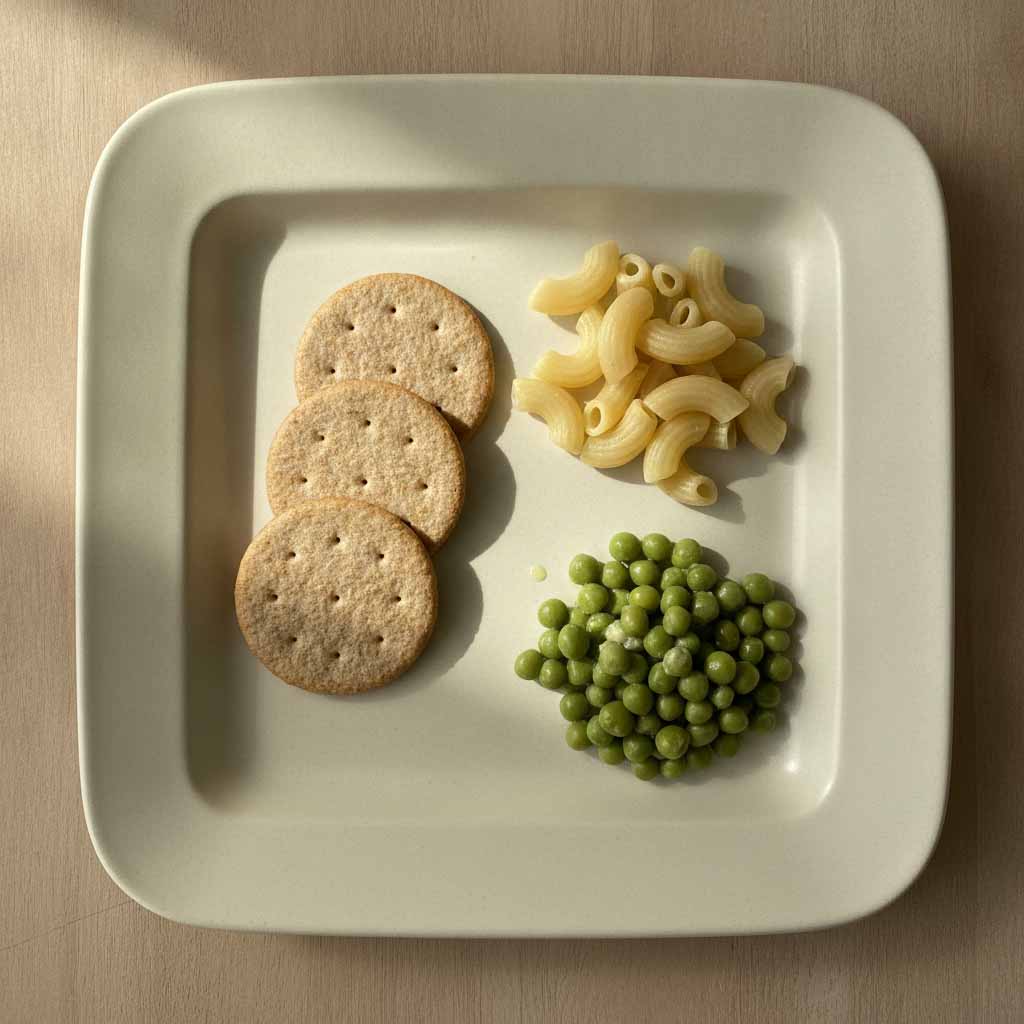
Fussy eating is incredibly common in children, and one of the patterns we often see is children who prefer crunchy foods such as crackers, toast, dry cereal and other snack foods.
These children can appear to eat all day because they are constantly grazing. But when we look more closely, they may be filling up on snack foods without getting enough of the nutrients their growing bodies need.
By the time a proper meal is offered, they aren’t hungry.
This can become a cycle – grazing throughout the day, refusing meals and then reaching for another preferred snack food when they become hungry again.
This becomes particularly important during growth spurts, when children’s nutritional requirements increase. If the diet remains very limited while the body is demanding more nutrients for growth and development, nutritional gaps can become more noticeable.
So with a fussy eater, one of the simplest places to start is not trying to introduce lots of new foods.
First, look at what they are actually eating across the day.
Health Snapshot
| What to Look For | Why It Matters |
|---|---|
| What you may notice | Your child prefers crunchy, familiar foods and snacks throughout the day rather than eating proper meals. |
| What may be contributing | Grazing can fill children up so they are not hungry when meals are offered. |
| What to keep an eye on | How often your child eats and how much nutritional variety they are actually getting. |
| Where to start | Write down everything your child eats for seven days. Do not change anything yet – just look at the pattern. |
Why Do Fussy Eaters Often Prefer Crunchy Foods?
Crackers, toast, dry cereal and other crunchy foods are common favourites with fussy eaters. They are familiar and predictable. A cracker looks, tastes and feels pretty much the same every time.
The problem is not that children eat these foods. It is when snack foods start making up most of the diet.
A child may have toast for breakfast, crackers for morning tea, dry cereal in the afternoon and another snack before dinner. They have eaten several times, but they may have had very little nutritional variety.
Is Your Child Grazing All Day?
Parents often tell us: ‘My child eats all day but won’t eat dinner.’ Sometimes, eating all day is exactly why.
If children are continually grazing, they do not have much opportunity to become hungry. Then a proper meal is put in front of them and they are not interested.
Having some structure around meals and snacks gives children an opportunity to actually feel hungry before they eat.
Eating All Day Doesn’t Always Mean Good Nutrition
A child can eat frequently and still be getting very little nutrition from their diet.
If most of the day consists of crackers, toast, dry cereal and other snack foods, there may be very few foods providing protein, iron, zinc and other important nutrients.
Rather than counting how many times your child eats, look at what those foods are actually providing.
Where is the protein? Where are the iron-rich foods? Where are the zinc-rich foods?
You do not need to calculate every nutrient. We are simply looking at whether the child’s diet contains enough variety to provide the nutrients a growing body needs.
What About Growth Spurts?
Children do not grow at exactly the same rate all year. There are periods when they grow rapidly and their nutritional requirements increase.
During a growth spurt, nutrients are needed to support the development of bones, muscles, tissues and the brain.
This can be particularly important for a fussy eater. Their nutritional needs may have increased, but their diet may still consist of the same small group of preferred foods.
What Do We Commonly See in Clinic?
In clinic, we often see children who appear to eat plenty because they are eating throughout the day.
But when we write down everything they eat, we see that much of it is grazing on snack foods. There may be plenty of crackers, toast, dry cereal and fruit, but very little protein and few foods providing iron or zinc.
By dinner, they are not hungry. The parent offers a proper meal, the child refuses it, and later asks for one of their preferred foods.
This can become a daily cycle.
The first step is understanding what the child is actually eating across the day and what may be missing.
Where Should Parents Start?
Keep a simple seven-day food diary. Do not change anything at first. Write down what your child eats and approximately what time they eat it.
At the end of the week, look at the pattern: how often are they grazing, how many snack foods are they eating, are they hungry at meals, and where are the regular sources of protein, iron and zinc?
This gives you a much clearer starting point without trying to change the child’s entire diet at once.
How The Children’s Naturopath Can Help
When we work with a fussy eater, we start by looking at what they actually eat across the day.
We look at grazing, preferred foods, meal patterns and whether the diet is providing enough nutritional variety for a growing child.
From there, we can identify simple changes that improve nutritional intake without overwhelming the child or the family.
Frequently Asked Questions
Why does my child prefer crunchy foods?
Crunchy foods are familiar and predictable, which can make them appealing to fussy eaters. The issue is whether they are starting to dominate the diet.
My child eats all day. Why won’t they eat dinner?
If they are grazing frequently, they may simply not be hungry enough when dinner is served.
Can a child eat plenty and still not get enough nutrients?
Yes. Eating frequently does not necessarily mean a child is eating a nutritionally varied diet.
Why do growth spurts matter?
As children grow, their bodies require nutrients to build bone, muscle and other tissues and support development. A very limited diet can become more important when nutritional requirements increase.
Ready to Better Understand Your Child’s Health?
If your child grazes throughout the day, prefers a small range of snack foods or is becoming increasingly fussy, looking at their overall nutritional intake can help identify where to start.
The Children’s Naturopath supports children and families through consultations at our St Kilda clinic in Melbourne and by phone throughout Australia, New Zealand and internationally.