Could Food and Gut Health Be Part of a Child’s Eczema Picture?
Eczema is a complex inflammatory skin condition. Food is not the cause of eczema for most children, and broad restrictive diets are usually not the answer.
However, some children with eczema also have food allergy, digestive symptoms, hay fever or other allergic patterns. In those children, looking at the broader picture can be useful.
The goal is to identify consistent individual patterns without unnecessarily removing nutritious foods.
What Does Childhood Eczema Look Like?
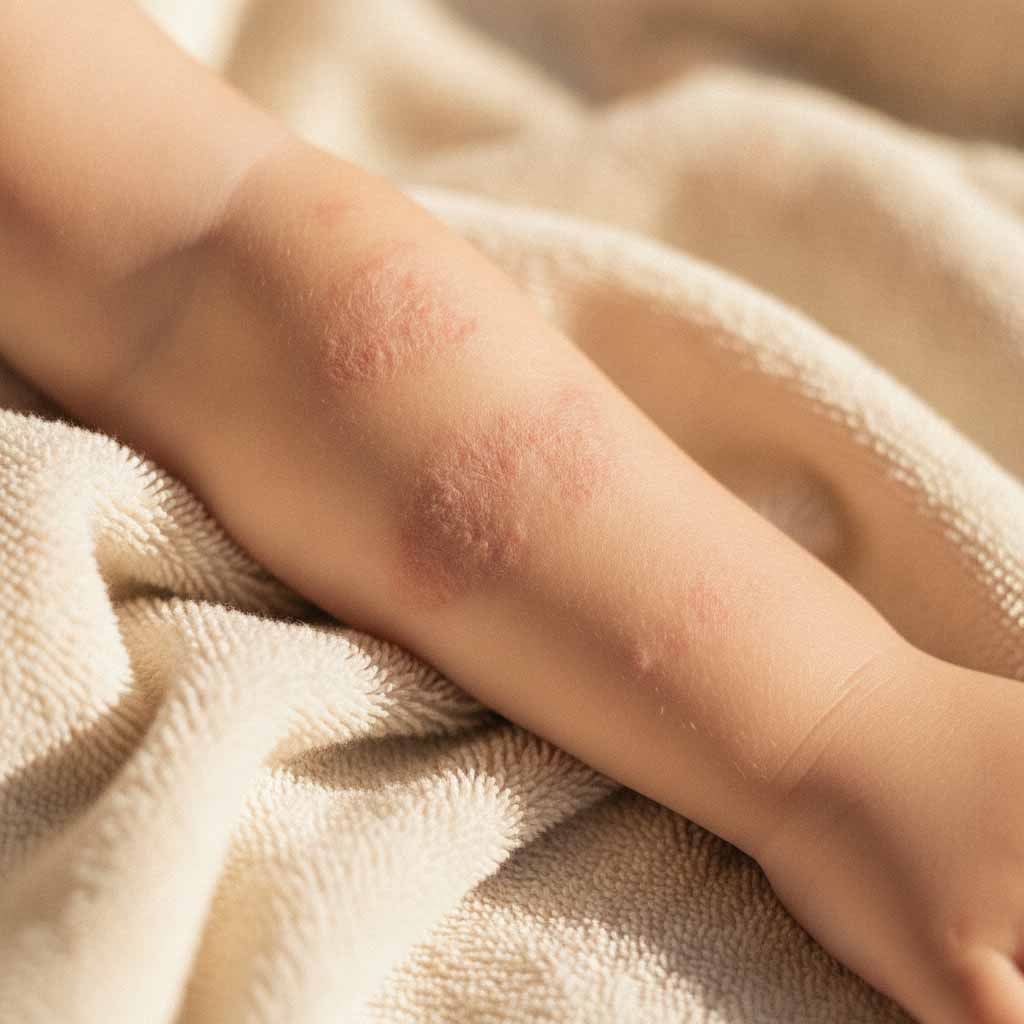
Eczema can involve:
- Dry skin
- Redness
- Itching
- Rough patches
- Cracked skin
- Weeping areas
- Sleep disruption from scratching
The severity and location can change with age, season and environmental exposure.
What Can Trigger Eczema Flares?
Triggers vary between children and may include:
- Heat
- Dry skin
- Irritants
- Infection
- Environmental allergens
- Saliva
- Contact irritants
- Individual allergies
This variability is one reason it is important not to assume that one food is responsible for every flare.
Is Eczema the Same as Food Allergy?
No.
Immediate food allergy can cause symptoms such as hives, swelling, vomiting, coughing or breathing symptoms soon after exposure. Eczema is different and often fluctuates for many reasons.
Some children can have both eczema and food allergy, but one should not automatically be used to explain the other.
What Is the Gut–Skin Connection?
The gut, immune system and skin interact through immune signalling and the microbiome. Researchers often refer to this broader relationship as the gut–skin axis.
That does not mean all skin problems start in the gut. It means digestive health can be one useful part of a whole-child assessment.
Which Digestive Questions Do We Ask?
When eczema occurs alongside digestive symptoms, we may ask about:
- Constipation
- Loose stools
- Abdominal pain
- Bloating
- Reflux
- Fussy eating
- Food-related symptom patterns
These clues help us decide whether digestion deserves more attention.
Could Histamine Be Relevant?
Histamine is involved in itch and allergic responses.
In selected children who experience eczema together with itching, congestion, restless sleep or noticeable food patterns, dietary histamine may be worth exploring.
This is not the same as saying histamine causes eczema. Our histamine article explains how to look for patterns without over-restricting the diet.
Why Is a Food and Symptom Diary Useful?
Eczema naturally waxes and wanes. Without a diary, it is easy to blame the most recent food eaten.
Record food, skin symptoms, sleep, bowel movements, congestion and obvious environmental changes. We are looking for repetition over time.
Why Not Remove Several Food Groups at Once?
If many foods are removed simultaneously, it becomes almost impossible to know which change mattered.
Broad restriction can also reduce nutritional variety at an age when children need adequate protein, fats, vitamins and minerals for growth.
Targeted, time-limited changes are much easier to interpret.
Which Nutritional Foundations Matter for Skin Health?
Normal skin growth and repair depends on adequate overall nutrition, including:
- Protein
- Essential fatty acids
- Zinc
- Iron
- Vitamin D
- B vitamins
- A varied whole-food diet
No single nutrient is a cure for eczema, but a strong diet supports normal growth and tissue health.
Can Eczema Affect Behaviour and Concentration?
Indirectly, yes. An itchy child may sleep poorly. Poor sleep can then show up the next day as tiredness, irritability or reduced concentration.
This is another reason to look at the whole symptom pattern rather than the skin in isolation.
Related Reading
- eczema in children
- food intolerances in children
- constipation in children
- hayfever and allergies
- childhood health conditions A–Z
- Histamine in Children: Could Food Be Affecting Sleep, Mood and Behaviour?
- The Gut–Brain Connection in Children: Digestion, Mood, Behaviour and Development
Ready to Better Understand Your Child’s Health?
If these patterns sound familiar, our team can look at your child’s nutrition, digestion, sleep, growth and lifestyle together to understand which factors may be relevant to their individual presentation.
The Children’s Naturopath supports children and families through consultations at our St Kilda clinic in Melbourne and by phone throughout Australia, New Zealand and internationally.