Does your child wake with damp hair, a sweaty pillow or pyjamas that feel wet?
Perhaps you notice their head and neck become particularly sweaty during sleep, even when the rest of their body feels comfortable.
Night sweating is relatively common in children and can have several explanations, including overheating, illness, restless sleep and breathing difficulties.
For some children, sweating may occur alongside snoring, mouth breathing or frequent movement during the night.
Understanding when sweating occurs, how excessive it is and whether other symptoms are present can help identify possible contributing factors.
Health Snapshot
| What to Look For | Why It Matters |
|---|---|
| Warm bedroom or heavy bedding | May cause overheating and increased sweating. |
| Head and neck sweating | Can occur during normal sleep, particularly in younger children. |
| Snoring or mouth breathing | May indicate sleep-disordered breathing. |
| Fever or recent illness | Changes in body temperature can cause sweating. |
| Restless sleep | May occur alongside breathing difficulties or other sleep disturbances. |
| Weight loss or persistent drenching sweats | May indicate an underlying condition requiring investigation. 1, 2 |
Why Do Children Sweat During Sleep?
Sweating is one of the body’s natural mechanisms for regulating temperature.
When body temperature rises, sweat glands release moisture onto the skin to help cool the body.
Children may sweat during sleep because of:
- A warm bedroom
- Thick blankets or doonas
- Heavy pyjamas
- Fever
- Recent illness
- Sleep-disordered breathing
- Other causes of disrupted sleep
Occasional sweating is not necessarily concerning, particularly when a child is otherwise well.
However, repeated heavy sweating deserves closer attention.
What If My Child Sweats Around the Head and Neck?
Parents often notice sweating around their child’s scalp, forehead and neck.
This can be particularly obvious in younger children because their hair and pillow become damp.
Head sweating can occur during normal sleep and may be influenced by room temperature, bedding and individual differences in sweating.
Sweating around the head alone does not establish a nutritional deficiency or underlying illness.
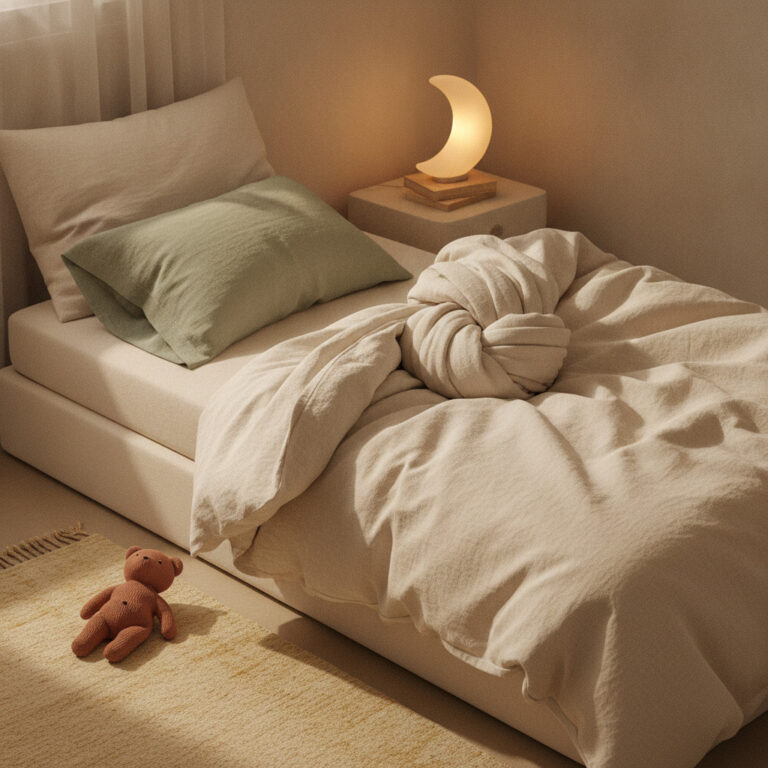
A useful starting point is to observe whether sweating improves when the bedroom is cooler or bedding is adjusted.
Could My Child Be Overheating?
Overheating is one of the simplest explanations for night sweating.
Children may become too warm when sleeping with:
- Heavy doonas
- Multiple blankets
- Thick or synthetic pyjamas
- Warm bedroom temperatures
- Excessive layers of clothing
Consider using breathable sleepwear and bedding appropriate for the season.
Check whether your child’s chest or back feels excessively warm during the night.
If sweating improves after adjusting the sleeping environment, overheating may have been contributing.
Could Snoring or Mouth Breathing Be Connected?
Night sweating can sometimes occur alongside sleep-disordered breathing.
Children with enlarged tonsils or adenoids, nasal congestion or obstructive sleep apnoea may experience increased breathing effort and repeated disturbances during sleep.
Possible signs include:
- Regular snoring
- Mouth breathing
- Gasping
- Pauses in breathing
- Restless movement
- Unusual sleeping positions
- Sweating during sleep
- Difficulty waking in the morning
- Daytime tiredness or irritability
Night sweating has been reported in children with sleep-disordered breathing, although sweating alone cannot diagnose the condition. 1, 2
If your child regularly snores or breathes through their mouth, these symptoms are important to consider alongside sweating.
What About Enlarged Tonsils and Adenoids?
Enlarged tonsils and adenoids are common contributors to obstructed breathing during sleep in children.
The adenoids sit behind the nose, while the tonsils are located at the back of the throat.
When enlarged, they can narrow the upper airway and make breathing more difficult during sleep.
Parents may notice:
- Persistent nasal congestion
- Mouth breathing
- Snoring
- Restless sleep
- Sweating
- Frequent waking
- Sleeping with the head tilted backwards
These symptoms may indicate that breathing difficulties are contributing to poor sleep quality.
Could Vitamin D Deficiency Be Involved?
Vitamin D is essential for normal bone development, calcium regulation and immune function.
It is particularly important during childhood growth.
However, sweating around the head or neck is not a reliable way to identify vitamin D deficiency.
Vitamin D status is assessed using appropriate clinical information and, when indicated, blood testing. 3
Although nutritional status is important for children’s overall health, sweating alone does not establish a vitamin or mineral deficiency.
Could Blood Sugar Be Contributing?
Sweating can occur when blood glucose becomes abnormally low.
However, true hypoglycaemia in children has several possible causes and is not established by night sweating alone.
When blood glucose falls significantly, other symptoms may include:
- Shakiness
- Pallor
- Hunger
- Irritability
- Weakness
- Confusion
Night sweating without other symptoms is not enough to conclude that a child has a blood sugar problem.
Could Illness or Fever Be Causing Sweating?
Children may sweat when they have a fever or as their body temperature returns towards normal.
This can occur during common childhood infections.
However, repeated drenching night sweats, particularly when accompanied by other symptoms, require further investigation.
Important accompanying symptoms include:
- Persistent fever
- Unexplained weight loss
- Swollen lymph nodes
- Unusual fatigue
- Ongoing illness
- Reduced appetite
These symptoms should not be attributed simply to a warm bedroom or nutritional deficiency.
Is My Child’s Sweating Excessive?
It can be helpful to distinguish between mild sweating and genuinely drenching night sweats.
Mild sweating may involve:
- Slightly damp hair
- A warm neck
- A small damp patch on the pillow
- Sweating that improves when bedding is adjusted
Heavy or drenching sweating may involve:
- Pyjamas becoming soaked
- Bedding becoming noticeably wet
- Needing to change clothing during the night
- Repeated episodes despite a comfortable room temperature
The severity, frequency and presence of other symptoms help determine whether further investigation is needed.
What Do We Commonly See in Clinic?
At The Children’s Naturopath, parents sometimes mention night sweating while discussing other sleep concerns.
For example, they may also report snoring, mouth breathing, nasal congestion, restless sleep or difficulty waking in the morning.
These additional symptoms can provide important clues.
We review the child’s sleep environment, bedtime routine, breathing patterns, nutritional intake and overall health.
When sweating occurs alongside persistent snoring or mouth breathing, sleep-related breathing difficulties become an important consideration.
Our aim is to look at the whole picture rather than assuming that sweating is caused by a nutritional deficiency.
Try This: A Seven-Night Sleep Observation
For seven nights, record:
- Bedroom temperature
- Clothing worn to bed
- Type and number of blankets
- Whether hair or pyjamas become damp
- Whether bedding becomes soaked
- Snoring
- Mouth breathing
- Restless movement
- Night waking
- Fever or illness symptoms
- Morning energy and mood
Notice whether sweating occurs every night or only under certain conditions.
A short recording of unusual breathing during sleep may also help explain associated symptoms.
Simple First Steps
1. Review the sleeping environment
Check whether the bedroom, clothing or bedding may be causing overheating.
2. Observe breathing during sleep
Look for snoring, mouth breathing, gasping or breathing pauses.
3. Consider recent illness
Sweating may occur with fever or during recovery from an infection.
4. Look at the severity
Distinguish slightly damp hair from repeated drenching sweats.
5. Keep a sleep diary
Recording sweating alongside breathing, restlessness and other symptoms may help identify patterns.
Frequently Asked Questions
Is it normal for children to sweat during sleep?
Yes. Mild sweating can occur during normal sleep, particularly in warm conditions or with heavy bedding.
Why does my child sweat mainly around the head?
The scalp and neck can become noticeably sweaty during sleep. Room temperature, bedding and individual differences in sweating may contribute.
Does head sweating mean my child is deficient in vitamin D?
No. Head sweating alone is not a reliable indicator of vitamin D deficiency. 3
Can enlarged tonsils or adenoids cause night sweating?
Children with enlarged tonsils or adenoids may experience obstructed breathing during sleep, and sweating can occur alongside other symptoms of sleep-disordered breathing. 1
Can blood sugar problems cause sweating at night?
Abnormally low blood glucose can cause sweating, but night sweating alone does not establish hypoglycaemia.
When should I be concerned about night sweating?
Repeated drenching sweats, particularly when accompanied by persistent fever, unexplained weight loss, swollen glands or unusual fatigue, warrant further assessment.
When to Seek Further Assessment
Persistent or worsening night sweating deserves assessment, particularly when it occurs despite a comfortable sleeping environment.
Regular snoring, gasping, breathing pauses, unexplained weight loss, persistent fever or unusual fatigue are important symptoms that should be investigated.
How The Children’s Naturopath Can Help
At The Children’s Naturopath, we review your child’s sleep patterns, nutritional intake, breathing habits and general health.
We consider whether overheating, nasal congestion, enlarged tonsils or adenoids, restless sleep or other symptoms may be contributing.
Our aim is to help families better understand possible causes of night sweating and identify practical steps to support more comfortable sleep.
Ready to Better Understand Your Child’s Health?
If your child regularly sweats at night, snores, breathes through their mouth or experiences restless sleep, book a consultation with The Children’s Naturopath to discuss their sleep and nutritional needs.
References
- Marcus CL, Brooks LJ, Draper KA, et al. (2012). Diagnosis and management of childhood obstructive sleep apnea syndrome. Pediatrics, 130(3), e714–e755.
https://doi.org/10.1542/peds.2012-1671 - American Academy of Sleep Medicine. International Classification of Sleep Disorders, 3rd edition, text revision (ICSD-3-TR). American Academy of Sleep Medicine, 2023.
- National Institutes of Health, Office of Dietary Supplements. Vitamin D: Fact Sheet for Health Professionals.
https://ods.od.nih.gov/factsheets/VitaminD-HealthProfessional/
The Children’s Naturopath supports children and families through consultations at our St Kilda clinic in Melbourne and by phone throughout Australia, New Zealand and internationally.